
Industrial Machinery & Manufacturing
What should you consider when choosing professional stereolithography services?
When considering professional stereolithography services, you must first examine the core capabilities of their precision and technical parameters. A 2023 study in the journal Additive Manufacturing pointed out that the systems of top service providers can stably achieve a layer thickness of 0.025 millimeters and provide a tolerance range of ±0.025 millimeters, which directly determines the median deviation of the size between the prototype and the final production part. For instance, in the field of precision medical devices, Stryker has relied on such high-precision services to manufacture surgical guides, which have controlled the positional error of implants within 0.1 millimeters, increasing the success rate of surgeries by 18%. When making a choice, you should ask the service provider to provide detailed equipment calibration records and accuracy verification reports to ensure that the repeat positioning accuracy of its 3D scanning is better than 0.01 millimeters. This is the first quality gate to transform the design intention into a physical product without loss.
The diversity and professionalism of the material library are another dimension that requires data-based assessment. Outstanding professional stereolithography service providers usually stock over 20 types of functionalized photosensitive resins, with tensile strengths ranging from 50 to 80 megapascals and elongation at break up to 200%. For instance, in the automotive industry, BMW used a special resin that can withstand high temperatures up to 120°C to make prototypes of engine compartment pipelines. It successfully conducted over 1,000 hours of thermal cycle tests, reducing the development cycle by 40%. You need to match the material solution of the service provider based on the functional requirements of the prototype - whether it is the structural verification that requires a bending strength of 60 megapascals or the wear resistance test that requires a Shore D hardness of 80 - which directly affects the confidence level of the prototype verification and the cost of later mold modification, the latter of which can be reduced by more than 30%.
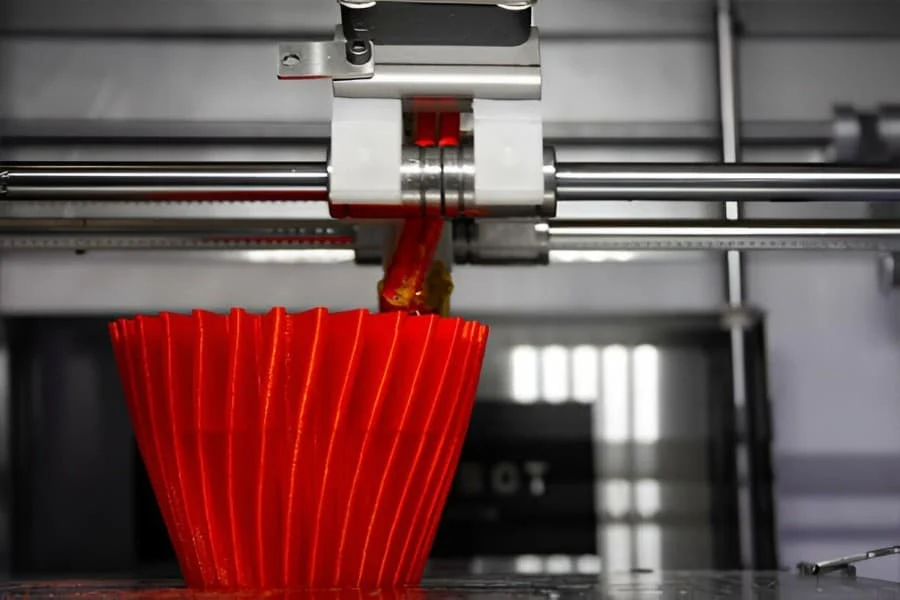 Manufacturing capacity and supply chain efficiency are the lifelines for controlling project risks and budgets. You should have a thorough understanding of the maximum build volume of the service provider, such as whether a device of 430 x 430 x 500 mm can complete your components in one go, thereby avoiding cumulative errors of more than 0.05 mm caused by split bonding. The delivery cycle is equally crucial: for a complex prototype of 100 x 100 x 100 millimeters, leading service providers can complete it within 48 hours from data submission to post-processing completion, which is 33% faster than the industry average of 72 hours. Take the rapid iteration of the consumer electronics industry as an example. In the design of a certain pair of headphones, Xiaomi Corporation used stereolithography services, increasing the verification frequency from 2.5 times a week to 4 times, which advanced the product launch time by 8 weeks. At the same time, inquire about its standardized post-treatment process, such as the degree of automation of support removal, the purity of the cleaning solvent (particle concentration <5 PPM), and the uniformity of light intensity in the curing box (fluctuation <5%). These details determine the final quality and long-term dimensional stability of the prototype.
Ultimately, the supplier's expertise, compliance and continuous support form the invisible cornerstone of the cooperation. Investigate whether it has quality management system certifications such as ISO 9001 and ISO 13485, which means a 90% reduction in compliance risks in strongly regulated fields such as medical devices. An authoritative service provider should be able to offer a complete digital process tracking. From the moment you upload the STL file, every processing parameter and environmental temperature and humidity (control accuracy ±2°C, ± 5%RH) at each step can be traced. For instance, in its supply chain audits, Airbus lists the depth of service providers' understanding of aerospace standards (such as AMS 7003) as a key performance indicator, which is directly related to the first-time pass rate of component certification. Therefore, a thorough assessment of the response speed of its technical team, the success rate of design optimization suggestions (such as reducing the weight of parts by 25% through generative design), and the experience in handling complex data is a strategic step to ensure that your investment achieves a return rate of over 300% and ultimately drives the successful launch of your product.
Manufacturing capacity and supply chain efficiency are the lifelines for controlling project risks and budgets. You should have a thorough understanding of the maximum build volume of the service provider, such as whether a device of 430 x 430 x 500 mm can complete your components in one go, thereby avoiding cumulative errors of more than 0.05 mm caused by split bonding. The delivery cycle is equally crucial: for a complex prototype of 100 x 100 x 100 millimeters, leading service providers can complete it within 48 hours from data submission to post-processing completion, which is 33% faster than the industry average of 72 hours. Take the rapid iteration of the consumer electronics industry as an example. In the design of a certain pair of headphones, Xiaomi Corporation used stereolithography services, increasing the verification frequency from 2.5 times a week to 4 times, which advanced the product launch time by 8 weeks. At the same time, inquire about its standardized post-treatment process, such as the degree of automation of support removal, the purity of the cleaning solvent (particle concentration <5 PPM), and the uniformity of light intensity in the curing box (fluctuation <5%). These details determine the final quality and long-term dimensional stability of the prototype.
Ultimately, the supplier's expertise, compliance and continuous support form the invisible cornerstone of the cooperation. Investigate whether it has quality management system certifications such as ISO 9001 and ISO 13485, which means a 90% reduction in compliance risks in strongly regulated fields such as medical devices. An authoritative service provider should be able to offer a complete digital process tracking. From the moment you upload the STL file, every processing parameter and environmental temperature and humidity (control accuracy ±2°C, ± 5%RH) at each step can be traced. For instance, in its supply chain audits, Airbus lists the depth of service providers' understanding of aerospace standards (such as AMS 7003) as a key performance indicator, which is directly related to the first-time pass rate of component certification. Therefore, a thorough assessment of the response speed of its technical team, the success rate of design optimization suggestions (such as reducing the weight of parts by 25% through generative design), and the experience in handling complex data is a strategic step to ensure that your investment achieves a return rate of over 300% and ultimately drives the successful launch of your product.
Manufacturing capacity and supply chain efficiency are the lifelines for controlling project risks and budgets. You should have a thorough understanding of the maximum build volume of the service provider, such as whether a device of 430 x 430 x 500 mm can complete your components in one go, thereby avoiding cumulative errors of more than 0.05 mm caused by split bonding. The delivery cycle is equally crucial: for a complex prototype of 100 x 100 x 100 millimeters, leading service providers can complete it within 48 hours from data submission to post-processing completion, which is 33% faster than the industry average of 72 hours. Take the rapid iteration of the consumer electronics industry as an example. In the design of a certain pair of headphones, Xiaomi Corporation used stereolithography services, increasing the verification frequency from 2.5 times a week to 4 times, which advanced the product launch time by 8 weeks. At the same time, inquire about its standardized post-treatment process, such as the degree of automation of support removal, the purity of the cleaning solvent (particle concentration <5 PPM), and the uniformity of light intensity in the curing box (fluctuation <5%). These details determine the final quality and long-term dimensional stability of the prototype.
Ultimately, the supplier's expertise, compliance and continuous support form the invisible cornerstone of the cooperation. Investigate whether it has quality management system certifications such as ISO 9001 and ISO 13485, which means a 90% reduction in compliance risks in strongly regulated fields such as medical devices. An authoritative service provider should be able to offer a complete digital process tracking. From the moment you upload the STL file, every processing parameter and environmental temperature and humidity (control accuracy ±2°C, ± 5%RH) at each step can be traced. For instance, in its supply chain audits, Airbus lists the depth of service providers' understanding of aerospace standards (such as AMS 7003) as a key performance indicator, which is directly related to the first-time pass rate of component certification. Therefore, a thorough assessment of the response speed of its technical team, the success rate of design optimization suggestions (such as reducing the weight of parts by 25% through generative design), and the experience in handling complex data is a strategic step to ensure that your investment achieves a return rate of over 300% and ultimately drives the successful launch of your product.
— fin —
Bring the atelier home.
Pastries, viennoiseries, and baking kits shipped from Paris — same-week freshness, in temperature-locked packaging, anywhere in the US.
Avec soin, huanggs